Everything About Lawful Video Clip Depositions: How They Function and Why You Required Them
Legal video clip depositions play a crucial duty in the lawsuits process. They capture witness testimonies in a way that maintains both talked words and non-verbal signs. This approach provides unique benefits over traditional written depositions. Understanding exactly how these depositions function and their value can substantially influence situation results. The intricacies of the process and its technical facets disclose much about their performance. What continues to be to be checked out is just how they are utilized in court setups.
What Is a Legal Video Deposition?
A legal video clip deposition is a taped statement extracted from a witness under oath, usually conducted outside of the courtroom. This procedure captures both the non-verbal and verbal responses of the witness, giving a comprehensive account of their statements. Legal video clip depositions offer multiple purposes in lawsuits, consisting of preserving a witness's testimony for later use in court, reviewing the integrity of the witness, and promoting negotiation conversations. They are commonly used in civil situations, specifically in injury or contract disputes, where witness accounts can greatly influence the outcome. The existence of a stenotype reporter guarantees that a verbatim transcript goes along with the video recording, keeping a reputable record of the procedures. Lawful video clip depositions are an important tool for attorneys, providing a vibrant method to present proof and assess the strengths and weak points of a situation before it reaches test.
The Refine of Performing Video Depositions
Conducting video clip depositions involves several vital actions to guarantee a efficient and smooth process. Attorneys have to schedule the deposition and inform all parties included, making certain that the place and time are suitable. Prior to the deposition, it is necessary to prepare the witness by going over the questions that will be presented and the total format of the session.On the day of the deposition, a certified videographer establishes the essential equipment, making sure perfect lights and audio high quality. As the deposition begins, the witness is vowed in, and questioning earnings as in a traditional deposition, now gone along with by video recording.Throughout the session, the videographer checks the recording to make sure and prevent disturbances clearness. As soon as completed, the video clip is evaluated for quality control. The recording is edited and saved safely for future referral, protecting the stability of the statement.
The Modern Technology Behind Video Clip Depositions
The innovation that sustains video depositions plays a vital role in making certain effective and clear documents of lawful process. This includes the equipment made use of for recording, the arrangement needed for optimal performance, and the procedures involved in editing and enhancing and saving the footage. Comprehending these elements is important for lawyers aiming to utilize video clip depositions successfully.
Tools and Configuration
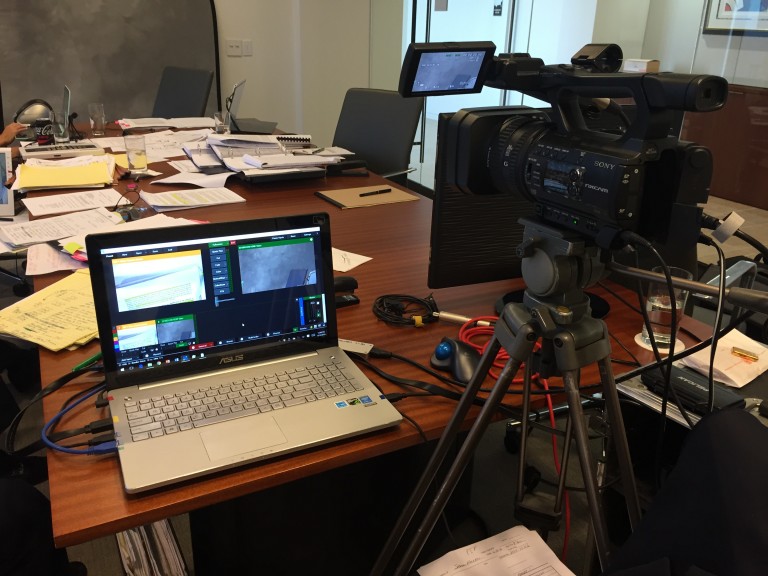
While getting ready for a video clip deposition, interest to devices and setup is important for recording trustworthy and clear footage. The key parts consist of high-grade video cameras, microphones, and lighting systems. Video cameras ought to be capable of videotaping in hd to assure that every detail is noticeable. Professional-grade microphones, ideally lavalier or shotgun types, improve audio clarity by minimizing background noise. Correct lights is vital; soft, diffused light assists avoid harsh shadows and enhances face presence. In addition, stable tripods are required to stop electronic camera shake. A committed room, without disturbances, even more improves the high quality of the deposition. Confirming that all equipment is tested prior to the session ensures a smooth recording experience, adding to the integrity of the lawful process.
Recording Refine Explained
A smooth recording process is vital for ensuring the honesty of video clip depositions. This process generally starts with high-grade electronic cameras and audio equipment, recording both aesthetic and acoustic components with accuracy. Throughout the deposition, the videographer monitors the configuration, making certain optimal framework and audio degrees. Illumination is thoroughly gotten used to remove shadows and improve exposure. The operator also videotapes the process in real-time, concentrating on both the deponent and any kind of pertinent records or exhibits presented. As the deposition unravels, the technology enables for instant playback, making sure that any technical problems can be promptly dealt with. This thorough interest to detail assurances that the last video precisely reflects the statement and keeps its credibility for lawful functions.
Modifying and Storage Options
Editing and enhancing and storage space options play an essential duty in the administration of video clip depositions, assuring that the taped material is both polished and securely maintained. Post-production editing and enhancing typically includes eliminating supplementary material, boosting sound and visual quality, and adding annotations or graphics where necessary. This process guarantees that the deposition is clear and specialist, ultimately aiding in legal presentations.In regards to storage, safe electronic platforms are important for guarding delicate info. Choices consist of cloud storage space services and encrypted difficult drives, both of which provide trusted access and backup. By making use of these innovations, attorneys can effectively take care of video clip depositions, assuring they are conveniently retrievable and safeguarded against unauthorized accessibility, thus keeping the integrity of the legal process.
Advantages of Video Clip Depositions Over Composed Depositions
Video depositions existing a number of benefits over traditional written depositions, mostly because of their capability to catch psychological nuances and non-verbal signs. This dynamic form of tape-recording allows lawyers and juries to observe body language, faces, and tone of voice, which are critical for understanding the witness's integrity and genuineness. In enhancement, video clip depositions can improve involvement by supplying a more immersive experience contrasted to fixed text.Additionally, video depositions promote far better retention of details for customers, as the visual component often assists in memory recall. They additionally streamline the testimonial procedure, permitting lawyers to quickly identify relevant statements and essential minutes. Video depositions can be shared easily, making them easily accessible for remote participants and throughout test discussions. Generally, the splendor of info caught in video style substantially boosts the lawful process, providing a much more complete point of view than composed depositions alone.
Planning for a Video Clip Deposition
When preparing for a video deposition, it is necessary to take into consideration both the individual and technical elements to assure a successful recording. The technological configuration has to be remarkable. This includes ensuring that the camera, microphone, and lights are operating effectively. The video footage ought to be clear, with audio quickly distinct, as these factors can noticeably influence the top quality of the recording.On the individual side, the deponent must be well-prepared. This involves familiarizing themselves with the concerns that may be asked and recognizing the procedure of a video clip deposition. Exercising responses can help in reducing anxiousness and boost clarity throughout the recording. Additionally, the deponent should dress properly and maintain a composed disposition, as body language and appearance can affect the understanding of their reputation. By attending to these technological and individual components, a video clip deposition can be carried out efficiently, offering its designated function in the legal procedure.
Just How Video Depositions Are Made Use Of in Court
The preparation and implementation of a video clip deposition play a considerable role in just how these recordings are made use of during court process. Video depositions serve as necessary proof, enabling judges and juries to observe the demeanor and integrity of witnesses. They enable the court to examine non-verbal signs, such as body movement and tone, about his which are frequently important in identifying the dependability of testament. In addition, video depositions can be used to revitalize a witness's memory or to test inconsistent statements made throughout trial. In some situations, they might change the requirement for real-time testament, especially when a witness is unable or inaccessible to go to court. Courts typically confess these recordings as part of the proof, giving a detailed look at this now view of the witness's declarations. Overall, their aesthetic component enhances the understanding of testament, making video clip depositions a very useful tool in legal process.
Finest Practices for Attorneys and Customers During Video Clip Depositions
Effective video depositions require cautious prep work and preparation by both customers and lawyers. Abiding by technological setup guidelines ensures that the taping high quality meets legal requirements, while preserving expert conduct is necessary to maintain the integrity of the process. Comprehending these ideal practices can greatly enhance the overall effectiveness of video clip depositions.
Prep work and Preparation
Technical Arrangement Standards
While planning for a video clip deposition, assuring a reputable technical arrangement is crucial for both lawyers and customers. First, a quiet, well-lit room needs to be chosen, free from disturbances and disruptions. The electronic camera must be placed at eye degree to create a natural watching angle, while the microphone must be positioned close sufficient to capture clear audio. Checking the equipment, consisting of video and audio top quality, before the deposition is necessary. Attorneys and clients should confirm their net link is steady to avoid disturbances. Additionally, it is recommended to have backup tools ready in case of technical failures. Familiarizing oneself with the video clip conferencing platform can likewise improve the total experience, leading to a smoother deposition procedure.
Expert Conduct Essentials
Keeping specialist conduct during video depositions is necessary for fostering a productive and considerate setting. Attorneys need to prepare thoroughly, guaranteeing they comprehend the situation and the witness's role. Throughout the deposition, attorneys should stay made up, avoiding aggressive wondering about that might provoke unneeded conflict. legal video depositions. They ought to likewise respect the opposite counsel, enabling reasonable dialogue while sticking to the policies of evidence. Witnesses are motivated to answer concerns clearly and honestly, abstaining from conjecture or conjecture. In addition, customers should be advised to stay concentrated, lessening distractions throughout the session. By sticking to these best techniques, all parties add to a more efficient deposition process, inevitably improving the stability of the legal process
Regularly Asked Inquiries
How Much Do Legal Video Clip Depositions Normally Price?
Can Any Individual Go To a Lawful Video Clip Deposition?
Attendance at a legal video deposition is typically restricted to particular individuals, such as parties and lawyers associated with the case. Others may call for permission or might not be permitted to go to whatsoever.
For how long Does a Video Deposition Usually Last?
Normally, a video clip deposition lasts between one to 4 hours, depending upon the intricacy of the instance and the variety of concerns asked. Breaks may be consisted of to guarantee individual comfort and focus.
What Happens if the Witness Can not Attend in Individual?
Plans are made for a remote deposition if a witness can not attend in person. This permits their testimony to be videotaped via video clip conferencing, guaranteeing that their declarations are maintained for lawful proceedings.
Are Video Depositions Legally Binding?
Video clip depositions are legally binding, given they abide by administrative guidelines and policies. They offer as recorded testimonies, ensuring that statements made by witnesses bring the very same weight as in-person testaments during legal proceedings. Lawful video clip depositions serve several functions in litigation, including maintaining a witness's statement for later usage in court, examining the trustworthiness of the witness, and helping with settlement conversations. navigate to this site Prior to the deposition, it is important to prepare the witness by talking about the questions that will be posed and the general style of the session.On the day of the deposition, a competent videographer sets up the essential tools, making certain ideal lighting and audio top quality. As the deposition starts, the witness is promised in, and questioning earnings as in a traditional deposition, but currently gone along with by video recording.Throughout the session, the videographer monitors the videotaping to prevent interruptions and ensure quality. Video depositions present a number of benefits over traditional written depositions, largely due to their capability to capture non-verbal cues and psychological subtleties. legal video depositions. In addition, video clip depositions can boost involvement by providing a much more immersive experience compared to fixed text.Additionally, video depositions facilitate far better retention of details for visitors, as the visual component usually helps in memory recall